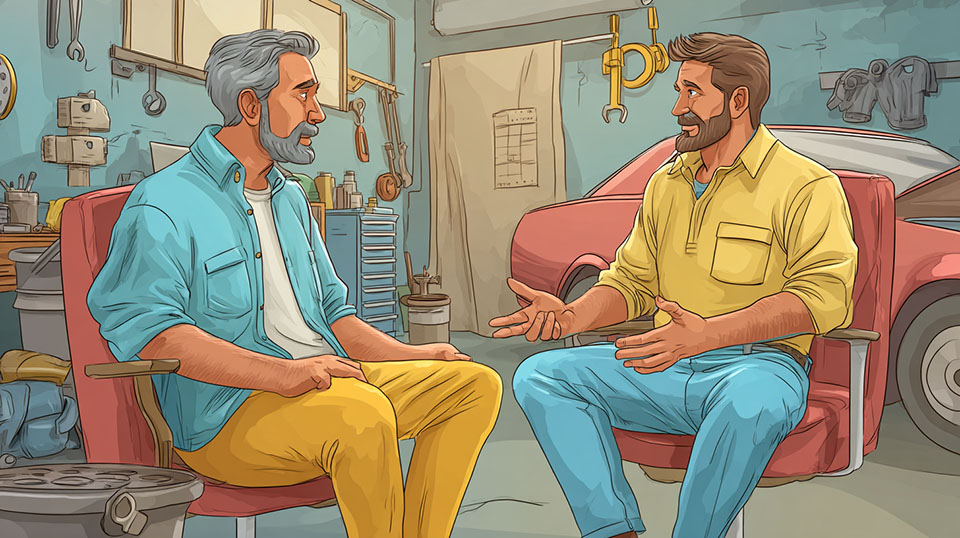



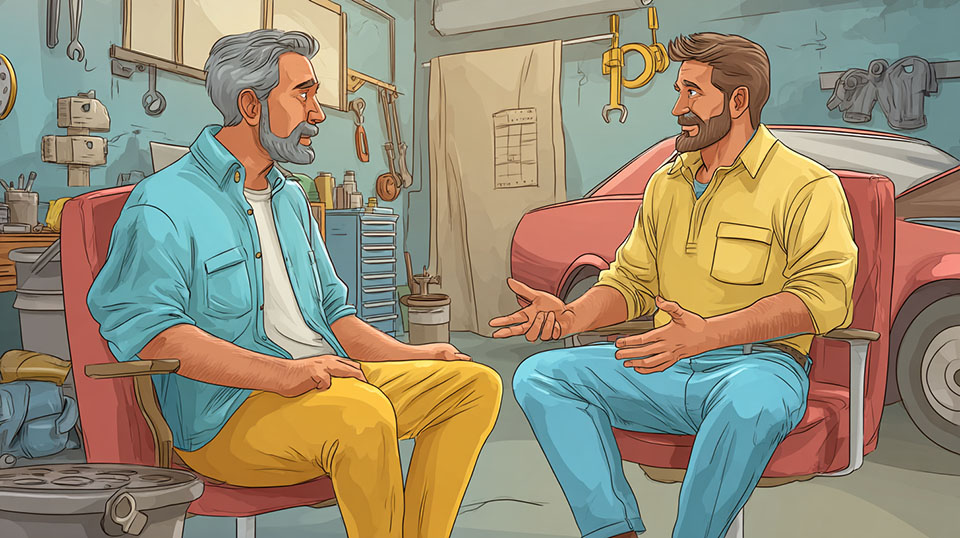
Mental health disorders and the inability to recognize and manage emotions is closely intertwined with personal situations that require supportive resources. Addiction research has shown that a significant relationship with a healthy family or community member – a supportive friend – can be as impactful as therapy with a clinician. With mental health disorders, having someone with whom to talk openly has been seen to encourage seeking additional and/or necessary professional help.
Considering the known importance of a supportive friend to people struggling in the area of mental-emotional health, this module seeks to give you a basic understanding of the mental health issues you are most likely to encounter as you reach out to support someone in need.
Our hope is that the understanding you gain from these lessons will dispel fear of the unknown and enable you to be more compassionate and confident in a supportive friend’s role.

SECTION 01: AN INTRODUCTION TO MENTAL HEALTH DISORDERS
LESSON 1.1 - Make It OK
Although mental health issues are widespread, they
are treatable. Through learning and talking openly
about mental illness, the stigma associated with
these conditions can be reduced and prevention and
early treatment encouraged. Life can get better for
the individual struggling with a mental illness, and
recovery is possible.
LESSON 1.2 - A Journey Through Mental Illness: Amber's Story
Personal stories are crucial for understanding mental
illness. They allow us to connect with the lived reality
of mental illness and to appreciate the strength,
resilience and perseverance of individuals seeking help
for mental health challenges. They cultivate our
empathy and compassion and encourage us to reach
out with understanding and support.
LESSON 1.3 - A Journey Through Mental Illness: Ashley's Story
Personal stories are crucial for understanding mental
illness. They allow us to connect with the lived reality
of mental illness and to appreciate the strength,
resilience and perseverance of individuals seeking help
for mental health challenges. They cultivate our
empathy and compassion and encourage us to reach
out with understanding and support.
SECTION 02: AN INTRODUCTION TO SUBSTANCE
USE DISORDER
LESSON 2.1 - An Overview Of Commonly Abused Substances
Becoming aware of the increasing problem of
substance use disorder in greater Minnesota,
and the drugs that are involved, can equip
community members to be a part of the solution.
LESSON 2.2 - A Journey Through Addiction: Brian's Story
A testimony to the power of our choices
and the freedom that is available to choose
the better path.
LESSON 2.3 - Support For Addiction Recovery
Having a support person(s) for an individual in
recovery ensures that the treatment process will
focus on their needs as a whole person. The
effectiveness of a support person is not dependent
on having gone through recovery themselves. Rather,
it is based on their willingness to consistently show
up and demonstrate acceptance, caring, and a belief
that transformation is possible.
SECTION 03: TRAUMA AND MENTAL HEALTH
LESSON 3.1 - An Introduction To Trauma
Trauma affects the whole person. Understanding the
impact of stress and trauma on the body, mind, and
emotions will enable you to help yourself and others
make more conscious decisions to support wellbeing. It is possible to heal from trauma and move
from survival to vitality and thriving.
LESSON 3.2 - Healing From Trauma
Whether you have experienced trauma or have
stress in your life, as we all do; learning tools
and skills to care for your body, mind, heart,
and spirit will make a positive difference.
LESSON 3.3 - Supporting Trauma Recovery
There are helpful ways to support the healing
process for a person recovering from trauma.
Learning to tune into your body, your emotions
and your spirit, as well as your mind, enables
you to connect with other people in ways that
are supportive and build healthy relationships.
We were designed to be medicine for one
another.
People seeking to rebuild their lives, possibly after homelessness, incarceration, or job loss, who need practical support, encouragement, and structure.